
Rebuilding credit after addiction recovery requires a structured approach to inventory, budgeting, and debt management. Addressing unpaid bills and legal fees reduces stress, a known relapse trigger. By treating financial repair as a component of recovery, individuals regain stability through consistent, on-time payments and professional guidance.
Effective restoration tools include secured cards, credit-builder loans, and credit freezes to prevent impulsive spending. Organizations like The Tolen Foundation integrate financial literacy into sober living to help residents practice responsible habits. This process typically leads to significant credit score improvements within one to two years.
Introduction
Money damage from addiction can weigh as much as the emotional wreckage. Past-due bills, angry collectors, and worried family members often follow us out of rehab. Many of us quietly wonder how we will ever rebuild credit after addiction recovery.
Shame and fear can keep us from opening bills or checking our credit report. While we focus on staying sober, the money problem keeps growing in the background. That pressure can feed cravings and put recovery at risk.
Here is the good news: rebuilding credit after recovery is a clear, step-by-step process. In this 2026 guide, we walk through honest financial inventory, realistic budgeting, debt repayment, and smart credit rebuilding tools. At The Tolen Foundation, we see men in San Antonio use these same steps every week, and you can work through them one small move at a time.
Key Takeaways
Before we dig into details, it helps to highlight the main ideas. These points show how money repair and sobriety can support each other. You can return to them whenever you feel overwhelmed.
- Financial damage from addiction is common. You are not the only one with collections, gaps in work, and low scores. Seeing these patterns as predictable, not personal failure, makes change feel possible.
- A simple money inventory and budget act like a recovery plan for your wallet. Listing debts, income, and bills removes guessing and panic. A written plan shows you what to pay, what to save, and what can wait.
- Credit rebuilding tools such as secured cards and credit-builder loans can work even with very low credit. Consistent payments matter more than any product name. At The Tolen Foundation, sober living structure and financial teaching give men space to practice these habits in real life.
What Does Addiction Really Do To Your Credit And Finances?
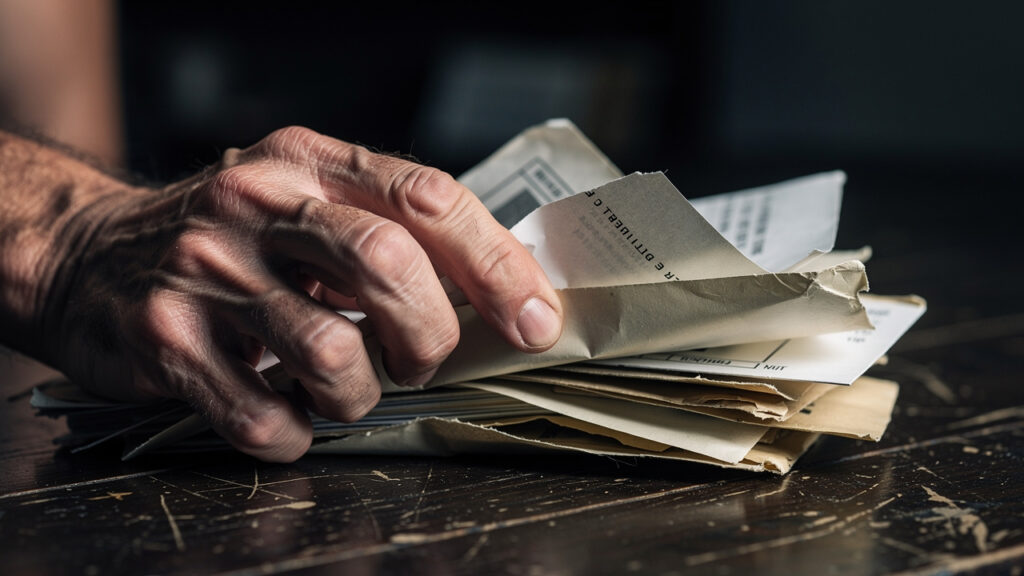
Addiction harms credit and finances by creating missed payments, new debt, and gaps in steady work. For many of us, unpaid bills and collections are not random events; they are a direct effect of substance use. When we understand this link, rebuilding credit after addiction recovery feels more like part of treatment than a separate problem.
During active use, we often stop opening mail or logging into bank accounts. Missed rent or utility bills may end up with collection agencies. Payday loans and high-fee lenders step in when regular credit dries up, and they can keep us stuck in a cycle of interest and late charges.
“I used to be more scared of my mailbox than my dealer. Every envelope felt like another secret I didn’t want to face.” — Former resident at The Tolen Foundation (name changed for privacy)
Legal trouble adds another layer. Fines, court costs, DUI fees, and restitution can follow us for years. According to SAMHSA, people with substance use disorders face higher rates of unemployment and money strain than the general public, which makes these debts even harder to handle — a pattern explored in research on Personal Recovery in Substance use disorder that highlights systemic financial barriers. That constant stress is one reason money problems are a known relapse trigger.
By the time we reach recovery, our FICO scores have often taken heavy hits. It is common to see scores in the 500s, several collection accounts, and long strings of late payments. That picture feels hopeless at first, yet it simply shows where we are starting. Once we stop using, every new on-time payment begins to rewrite that report.
To sum up, addiction often:
- Damages payment history through late or missed bills
- Increases high-interest debt from credit cards and payday loans
- Creates gaps in employment and income
- Adds legal and court-related debts that are hard to ignore
Seeing these patterns on paper helps you treat them like symptoms of illness, not proof that you are broken.
The True Cost Of Active Addiction
Active addiction drains money faster than most of us realize in the moment. Men often tell us they spent hundreds of dollars each week, and sometimes in a single day. Researchers at NIDA describe how severe substance use pulls money away from housing, food, and health care, which pushes people toward financial crisis.
Families in San Antonio feel this too through drained savings, co-signed loans, and unpaid personal loans. Studies cited by SAMHSA show that relatives shoulder a large share of addiction-related expenses and debt. That can mean parents taking on credit card balances or spouses falling behind on their own bills.
Some of the hidden costs of active addiction often include:
- Rent paid late because money went to substances
- Lost deposits or evictions
- Maxed-out cards used for cash advances
- Medical or dental care delayed until it becomes an emergency
- Missed work or job loss that cuts income right when debt is rising
“I thought I had a spending problem. It took sobriety to see I had a priorities problem.” — Group member at a recovery meeting in San Antonio
When we finally seek help, credit scores have usually dropped, bills have stacked up, and trust at home feels thin. Naming that full cost helps us and our families step out of shame. From there, we can treat money repair as another part of recovery instead of a private failure.
How Do I Start Rebuilding My Finances In Recovery?
To rebuild your credit after addiction recovery, the first real step is a full money inventory. We write down every debt, every source of income, and every monthly bill in one place. When we see the whole picture, the unknown stops feeling endless and we gain a clear starting line.
A simple way to begin is to create three short lists — an approach consistent with frameworks described in research on Personal Recovery in Substance use disorder, which emphasizes structured self-assessment as a foundation for lasting change:
- Debts: credit cards, medical bills, court costs, student loans, payday loans, money owed to family or friends.
- Income and savings: paychecks, side work, benefits, child support you receive, and any savings accounts.
- Regular expenses: rent, sober living fees, food, transport, phone, child support you pay, and recovery expenses like meetings or therapy.
Even if the lists feel messy, getting everything on paper lets you stop trying to keep it all in your head.
Next, check what appears on your credit reports. AnnualCreditReport gives free reports from Equifax, Experian, and TransUnion each year. Research from the CFPB found that about one in five consumers has at least one error on a report. Disputing wrong late marks or accounts you never opened can raise a score before you even open new credit.
When you pull your reports, look for:
- Accounts you do not recognize
- Late payments you believe are wrong
- Debts listed more than once
- Old negative items that may be past the normal reporting time
You can then write or submit online disputes with the credit bureaus and with the creditor that reported the item.
Build A Budget That Functions Like A Recovery Plan

A budget in recovery works like a relapse plan for your money. Instead of guessing, we decide ahead of time where each dollar goes. That way, stress or cravings have less power to push us into impulsive spending.
“A budget is telling your money where to go instead of wondering where it went.” — Dave Ramsey
Think of your budget as a short, realistic agreement you make with yourself every month:
- Start with survival needs. Housing, utilities, food, and basic transport sit at the very top. You pay these before any other bill. Staying sheltered, fed, and able to reach work or meetings keeps both recovery and income steady.
- Then pay debts and savings, even in small amounts. Aim for at least the minimum on every debt and a small deposit into savings. Even ten or twenty dollars per paycheck adds up over time. These moves protect credit from new late marks and begin a basic emergency cushion.
- Track spending in a simple way you will actually use. You can use an app like Mint or YNAB, a basic spreadsheet, or a notebook. Regular check-ins with a sponsor, roommate, or family member keep you honest. Treating these money talks like recovery check-ins keeps shame from taking over.
According to Experian, people who actively track spending are more likely to pay bills on time. When we treat budgeting as a daily recovery skill, asking “need or want” before each purchase, we train the same muscles we use to say “no” to substances.
If you are staying in a sober living setting such as the residence being developed by The Tolen Foundation, predictable housing costs make this budgeting work much easier.
What Are The Best Ways To Rebuild Credit After Addiction?

The best ways to rebuild your credit after addiction recovery center on a few basic habits. We clean up errors, pay every bill on time, keep balances low, and add safe new accounts that report positive history. None of this requires perfect past behavior, only steady effort.
We start with the three credit reports and look for mistakes. If we see accounts that are not ours or debts shown twice, we send written disputes to each bureau. Guides from Experian and Equifax walk through this process with sample letters. Fixing even one large error can give a quick score lift.
Next, we add new positive history carefully:
- Secured credit cards from a bank or credit union use your cash deposit as the limit and then report payments like any other card.
- Credit-builder loans, common at community banks or credit unions, hold the money in savings while you make payments and then release it at the end.
- On-time payments on existing loans, car notes, or student loans help just as much as new products.
According to FICO, payment history makes up about thirty-five percent of a FICO score, so every on-time payment matters.
We also manage credit utilization, which means how much of your available limit you use. Credit educators at Experian suggest staying under thirty percent of the limit on each card, and lower is even better. Paying a card down before the statement date, not just the due date, can help this number look better on your reports.
In short, strong credit rebuilding usually follows this pattern:
- Fix mistakes on your credit reports.
- Pay every bill on time, even if it is only the minimum.
- Keep card balances low compared with your limits.
- Use one or two starter products (secured cards or credit-builder loans) and handle them carefully.
With a steady plan, people often begin to see score changes within several months.
Consider A Credit Freeze During Early Recovery
A credit freeze can protect people in early recovery from fast, emotional money choices. When you place a freeze with Equifax, Experian, and TransUnion, new lenders cannot open accounts in your name until you lift it. The freeze is free, works nationwide, and does not change your current score. It simply locks the door while you practice new habits.
This step helps men whose addiction involved heavy spending, gambling, or frequent payday loans. Families sometimes feel safer knowing a freeze stands between their loved one and quick new credit offers.
You can usually place a freeze:
- Online through each bureau’s website
- By phone using the numbers listed on your credit reports
- By mail, if you prefer written requests
For extra support, tools such as Experian Boost can count on-time utility and phone payments toward certain scores. That gives men with thin credit files another way to show steady behavior without taking on large new debts.
How Does The Tolen Foundation Support Financial Recovery Alongside Sobriety?

At The Tolen Foundation, we see every day that sobriety and money repair move together. Our focus on men in recovery in San Antonio shapes how we design sober living, education, and advocacy. When a man has safe housing, clear expectations, and people checking in, he finally has room to rebuild his credit after addiction recovery.
Our upcoming upscale sober living residence in San Antonio is being built with this link in mind. Shared housing costs and predictable program fees keep monthly expenses steady instead of chaotic. That steady base makes budgeting simpler for residents and for the families who support them. It also gives men time to repair work histories and build income before taking on higher rent.
We weave financial conversations into daily recovery work:
- Staff, mentors, and peers help residents create budgets, review spending, and plan repayment steps — a model supported by evidence on vocational and recovery capital programs like those described in research on Frontiers | RecoveryWorks: vocational support services for long-term recovery.
- When someone is afraid to call a creditor or landlord, we practice that call together first.
- Men learn how to read their credit reports, set up payment reminders, and talk honestly with family about money.
This kind of support turns a frightening task into something a man can handle with a steady voice.
Because we focus on financial literacy and consumer advocacy, we connect men and families with outside help too. That may include nonprofit credit counseling agencies such as the NFCC, community credit unions, or job programs in Bexar County. We want residents to leave with contacts they can still call long after they move out. Our hope is that every man feels confident opening bills, reading a credit report, and asking questions when something looks wrong.
For families, we offer community, not just rules. Spouses, parents, and siblings often carry fear about money and relapse. When they see financial planning built into sober living, they feel less pressure to rescue or control. Instead, they can support clear goals, healthy limits, and shared wins as credit scores and savings slowly rise.
The Road Ahead Is Longer Than You Think – And That Is Okay

The road to rebuilding your credit after addiction recovery usually takes years, not weeks, and that timing is normal. Credit scoring models reward consistent behavior over time, so every month of on-time payments helps. Education from Experian notes that many consumers see score gains within six to twelve months of steady payments and lower balances. For men starting in the 500s, reaching the mid-600s in one to two years is a realistic aim.
Many people in recovery say, “one day at a time.” The same idea works for money: one paycheck, one bill, one small step at a time.
We built The Tolen Foundation for men and families who want support for that longer path. If you live in or near San Antonio and need sober living plus guidance around debt, credit, and budgeting, we would be honored to talk. Visit tolenfoundation.org to learn more about our mission and upcoming residence. Wherever you start, the next right step with money can sit beside the next right step in your recovery.
Frequently Asked Questions
Question 1: How long does it take to rebuild credit after addiction recovery?
The timeline to rebuild credit after addiction recovery is usually one to two years. Many people see progress within six to twelve months of on-time payments and lower balances. Your starting score, income, and debt level all affect that pace, so your experience may be faster or slower.
Question 2: Can I get a credit card while in a sober living program?
Yes, many men in sober living still qualify for a secured credit card. It uses a cash deposit as the limit. Using it for small purchases and paying in full each month builds new history. If you are staying with The Tolen Foundation once the residence opens, staff can walk through the pros and cons with you before you apply.
Question 3: What if I have debt from legal fees or court costs from addiction?
Legal and court-related debts should usually sit near the top of your plan. Unpaid fines can cause wage garnishment, license problems, or new legal trouble. A nonprofit counselor through the NFCC can help set payment terms you can keep while you also cover rent, food, and recovery expenses.
Question 4: Is financial stress really a relapse risk?
Yes, research from SAMHSA and treatment centers links money stress with relapse risk. When bills feel out of control, cravings often rise. Budgeting, asking for help, using tools like credit freezes, and celebrating small wins all lower that stress and support sobriety.
Question 5: How can family members help with credit rebuilding without enabling?
Family members help most when they support structure, not quick fixes. Sitting with a loved one while they pull credit reports or write a budget builds skills without taking control. Some families also add a recovering relative as an authorized user on a long-standing, well-managed card without handing over the card itself. That lets the relative gain positive credit history while the family keeps spending limits in place.